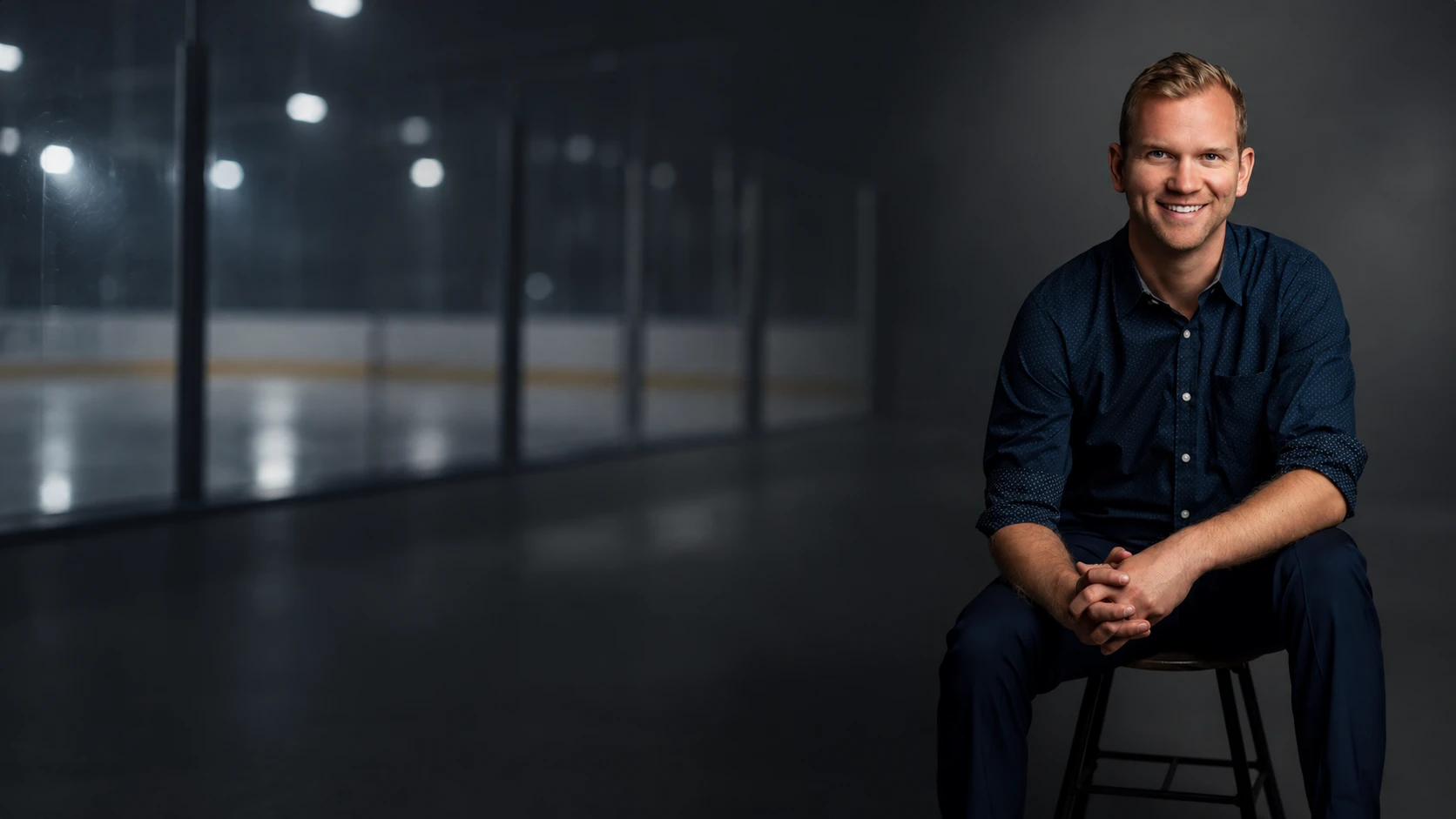
On stage
Keynote speaker
For sport and business organizations.
Book Cassidy to speakCoach, author, speaker and founder of CEP Mindset. At 17 he was a healthy scratch 48 times in his NHL draft year. It took him nearly a decade to build a mental game that held up, so he built CEP to make sure athletes don’t have to figure it out the hard way.
Opening night
“It is the opening night of my NHL draft year. I’m 17 years old and I’m in the starting lineup. But the puck drops, and nothing goes the way I imagined.”
By the 15-game mark he had zero points and zero confidence. His ice time was cut, then he became a healthy scratch: not even on the bench, but in the stands eating popcorn. “That happened to me 48 times that season. That’s a lot of popcorn!”
He finished the season with zero points. “And in case it’s not clear, you don’t get drafted to the NHL with zero points.”
His story
Five chapters, from a 17-year-old watching from the stands to the founder of CEP Mindset.
Chapter 1
You see, I had a history of wearing my emotions on my sleeve. As a kid, when things went wrong, I’d slam my stick, doubt myself, spiral into frustration and overthink every mistake.
I was outcome-obsessed, and it created a constant battle in my head. Every shift felt like I had to produce points, and every glance from a coach, a parent or a scout carried the weight of judgment. When I got a point early in a game, I played loose and confident. When I didn’t, the tension crept in. I’d grip my stick tighter, second-guess my decisions, and fall into a downward spiral I couldn’t pull myself out of.

I was Mr. Inconsistent. I’d go from playing confident and free to looking like a completely different player, performing well below my capabilities.
Chapter 2
The worst part wasn’t failing at my goals. It was going back home to North Bay, where I was the only guy playing in the OHL at the time, and hearing someone say: “Hey, if I played 34 games in the OHL, I would have at least put up one point.”
“You think I didn’t try to put up a point…?”
My mind went blank and my body went numb as my entire identity was brought into question. Had I wasted everything I’d worked for? Could I even bounce back? I wanted to quit so bad.
Chapter 3
My entire mindset that year had been about putting up points, getting drafted and rising the ranks. I was so consumed with external results that I lost touch with the love of the game. So I asked myself:
What would my 10-year-old self say to do?
What did I enjoy so much about the game back then?
Could I find and experience that same joy again?
Reconnecting with why I played fuelled the grit I needed to move forward. I went on to play 8 more seasons of competitive hockey, including a junior championship and a cup of coffee in the pros. I still love competing against my friends on the outdoor rink today.
Chapter 4
I faced many more challenges: a broken jaw, being sent down, and the constant battle for confidence. It took nearly a decade of trial and error to piece together a mental game that worked. The sports world is full of cliché advice, and none of it helped me:
“Stay positive.”“Don’t worry about it.”“Be confident.”
I needed real strategies, personalized and practical. That search drove me into academia and a Ph.D. in Sport Psychology at York University. Along the way I read hundreds of books and learned from leaders in human performance like Dr. John Demartini and Todd Herman.
That blend of lived experience and science became the CEP Mindset System: a framework built to help athletes play with reliable confidence, achieve Consistent Elite Performance and, most importantly, stay connected to the love of the game.
Chapter 5
So I’ve dedicated my career to making sure athletes don’t have to fight the same battles I did: riding the rollercoaster of inconsistency, gripping their stick too tight, or figuring it all out the hard way.
“At the end of the day, sport should be fun.”
Today CEP Mindset is a team of 20+ coaches with a clear mission: to change the culture of sport by helping athletes build healthier, stronger mindsets, one athlete at a time.
Watch Cassidy tell his storyVideo · YouTube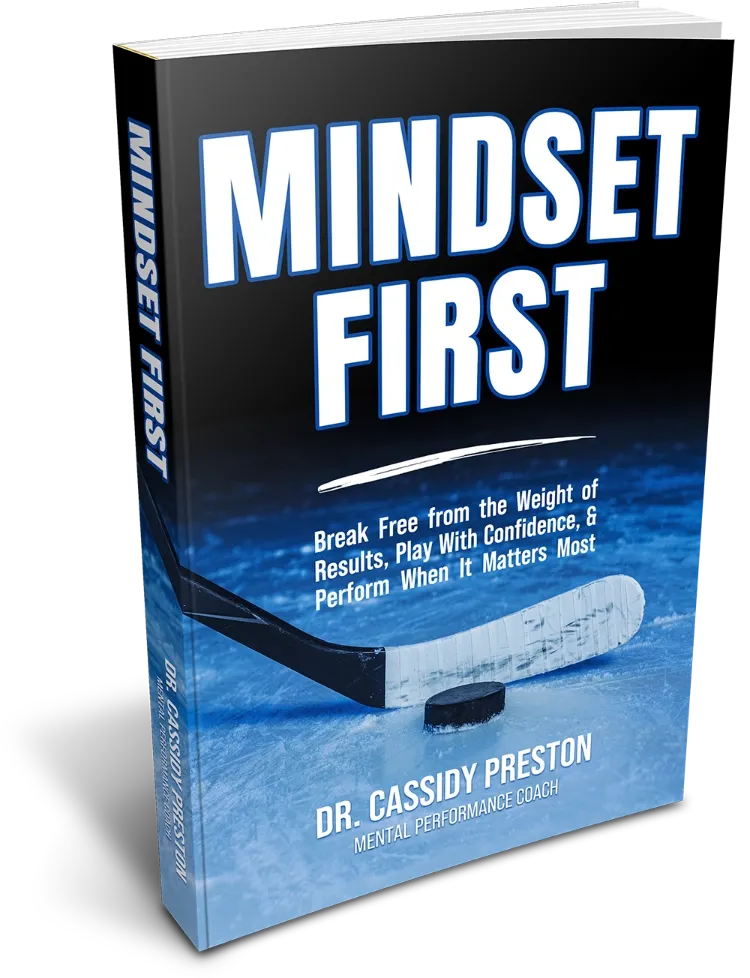
The book
Dr. Cassidy Preston’s Amazon best seller, from the coach who leads the quality of coaching across CEP Mindset.
Find it on AmazonBeyond the rink
Bring Cassidy’s story and the CEP Mindset System to your event, or get his take for your audience.
On stage
For sport and business organizations.
Book Cassidy to speakIn the media
From podcasts to news outlets, including:
The AthleticCBCGlobal News
Get Cassidy’s takeWork with Coach Cassidy
Your first conversation is a short intake call about fit, options and rates.
Meet more of the team